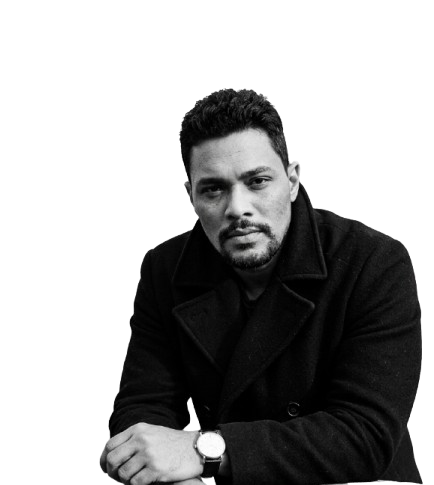
Razzak
Ali.
A career built at the intersection of operations, banking, risk and technology — transformed into a mission to build practical enterprise software that solves real operational problems.

A career built at the intersection of operations, banking, risk and technology — transformed into a mission to build practical enterprise software that solves real operational problems.
Razzak Ali brings together more than two decades of experience spanning enterprise operations, banking, credit risk, process governance and software-enabled transformation. His founder journey is rooted in a recurring observation: complex organizations work better when technology is designed around the people, controls and workflows that actually run them.
Razzak's career developed across very different operating environments — technology-enabled BPO, banking, finance, credit risk, collections, logistics and enterprise operations. That breadth created a practical understanding of how information moves through an organization, where approvals stall, why controls fail, and how repetitive work can be redesigned. Over time, software stopped being only a support tool and became the means to turn operational knowledge into repeatable systems.
Working on HP back-office automation connected technology directly to operational performance. The source profile records more than 144 applications/modules and seven operational portals, together with recognition from Hewlett Packard and Wipro's highest appraisal rating.
Years in financial services deepened his exposure to credit appraisal, portfolio monitoring, collections, maker-checker controls, compliance, MIS and high-volume processing — disciplines that later became recurring patterns in enterprise system design.
The focus expanded from individual functions to cross-department workflows: Finance, HR, Admin, Projects, inventory and operational governance. This is where process redesign, dashboards, structured approvals and system-led control converged.
Novva represents the convergence of those experiences: build software from the operational problem outward, combine controls with usability, and give organizations systems that reflect how their teams actually work.
Understand who does what, what information they need, where decisions happen and where the process breaks.
Speed matters, but so do approvals, traceability, auditability and clearly assigned responsibility.
A system succeeds when the people doing the work can understand it quickly and use it consistently.
Dashboards, KPIs and exception visibility turn digitization into management information and action.
Build useful software. Not technology for its own sake, but systems that make an operation easier to run, easier to understand and easier to improve.
Discover Novva Inc. →